Here is a link to the independent reading.
Presenting Tuesday
Nick
Mattie
Robbie
Pablo
Kelsey
Presenting Wednesday
Kaylee
Chase
Mackenna
Scott
Josh

Block Day, April 26 ~ TWHF finished!
Discuss the end!
As a final assessment of this novel, let's process motifs for meaning.
MOTIF - any recurring element (symbols, images, phrases, actions, etc...) that has symbolic significance in a story.
Goal: Create an artistic expose of what idea(s)/themes you believe Lewis is expressing through the use of a specific motif.
Requirements: You must be ready to present your art piece on Monday. Please include at least five quotes in your presentation (these could be printed or emailed to me). At least one quote must be from another source (other Lewis works, the Bible, Greek texts, etc...) and be used to find meaning via inter-textual comparison.
Shall we brainstorm some motifs?
HW: TWHF Motif project is due Monday!
My Example Project
Motif: "Dark places are holy places."
1. "I know that they [the gods] dazzle our eyes and flow in and out of one another like eddies on a river, and nothing that is said clearly can be said truly about them. Holy places are dark places. It is life and strength, not knowledge and words, that we get in them. Holy wisdom is not clear and thin like water, but thick and dark like blood" (50).
2. "I have never seen anything more wonderful that the priest's stillness" (53).
3. "For a while after that an ugly fancy used to come to me in my dreams, or between sleeping and waking, that I had walled up, gagged with stone, not a well but Psyche (or Orual) herself. But that also passed. I heard Psyche weeping no more. The year after that I defeated Essur" (235).
4. "It was the calmest day--pure autumn--very hot, yet the sunlight on the stubble looked aged and gentle, not fierce like the summer heats. You would think the year was resting its work done. I whispered to myself that I too would begin to rest" (239).
5.. "It's well for me I didn't hear this story fifteen years ago; yes, or even ten. It would have reawakened all my sleeping miseries. Now, it moes me hardly at all" (242).
6. "The memory of his voice and face was kept in one of those rooms of my soul that I didn't lightly unlock. Now, instantly, I knew I was facing them--I with no strength and they with all; I visible to them, they invisible to me; I easily wounded (already so wounded that all my life had been but a hiding and staunching of the wound), they invulnerable; I one, they many" (245).
Therefore.... "Holy places are dark places" really means "True places are vulnerable places."
| Bring your $5!!! |
As a final assessment of this novel, let's process motifs for meaning.
MOTIF - any recurring element (symbols, images, phrases, actions, etc...) that has symbolic significance in a story.
Goal: Create an artistic expose of what idea(s)/themes you believe Lewis is expressing through the use of a specific motif.
Requirements: You must be ready to present your art piece on Monday. Please include at least five quotes in your presentation (these could be printed or emailed to me). At least one quote must be from another source (other Lewis works, the Bible, Greek texts, etc...) and be used to find meaning via inter-textual comparison.
Shall we brainstorm some motifs?
HW: TWHF Motif project is due Monday!
My Example Project
Motif: "Dark places are holy places."
1. "I know that they [the gods] dazzle our eyes and flow in and out of one another like eddies on a river, and nothing that is said clearly can be said truly about them. Holy places are dark places. It is life and strength, not knowledge and words, that we get in them. Holy wisdom is not clear and thin like water, but thick and dark like blood" (50).
- Like our hearts, the dark places can feel confusing and muddled.
- Holiness is about what is inside us, not just our facades and the things we build like knowledge and words. We can see clearly through water. Blood is thick and hides things.
2. "I have never seen anything more wonderful that the priest's stillness" (53).
- The priest spends enough time in the darkness (in vulnerability) that he is simply solid...he knows his mission and fears nothing. No insecurity is left in him.
3. "For a while after that an ugly fancy used to come to me in my dreams, or between sleeping and waking, that I had walled up, gagged with stone, not a well but Psyche (or Orual) herself. But that also passed. I heard Psyche weeping no more. The year after that I defeated Essur" (235).
- The only holy place of vulnearability is in Orual's sleep...the only place of darkness or imagination. Holy places are places of the raw spirit, not the material concerns.
4. "It was the calmest day--pure autumn--very hot, yet the sunlight on the stubble looked aged and gentle, not fierce like the summer heats. You would think the year was resting its work done. I whispered to myself that I too would begin to rest" (239).
- In the light, beautiful setting, Orual feels good and satisfied. She has not yet met any recognition about her misdeeds. In the daylight, she only judges her life by the material truth that she can see right now. It is only in the dark places that she must face her hubris.
5.. "It's well for me I didn't hear this story fifteen years ago; yes, or even ten. It would have reawakened all my sleeping miseries. Now, it moes me hardly at all" (242).
- Here, Orual admits that she has been sleep walking. Though she has been awake and in the light, her spirit was "sleeping," ignoring her miseries and flaws.
6. "The memory of his voice and face was kept in one of those rooms of my soul that I didn't lightly unlock. Now, instantly, I knew I was facing them--I with no strength and they with all; I visible to them, they invisible to me; I easily wounded (already so wounded that all my life had been but a hiding and staunching of the wound), they invulnerable; I one, they many" (245).
- The dark places are the places of vulnerability and truth we don't want to face or admit.
- The light/dark imagery is backed by waking/sleeping and day/night. It is clear that the day time is ours, but the sleeping/darkness is where the gods speak truth. The "waking vision" shows that the goal of that truth is to wake us up not just to let us be blind and go about our days.
Inter-textual References:
- "Hear, Israel, the Lord is our God, the Lord is One. Love the Lord your God with all your heart and with all your soul and with all your strength." (from the Shema based on Deut. 6:4-5). To be One means to be solid, consistent, unchanging, legitimate. (One means holy!)
- "Thus you are to be holy to Me, for I the LORD am holy; and I have set you apart from the peoples to be Mine" (Lev. 20:26).
Other evidence
- Orual sees the house in twilight (132)
- Cupid only comes in the night when Psyche will know him by his vulnerable heart & thoughts. She cannot judge him by looks in the daytime.
- The god is named the "shadowbrute" & Psyche is okay with this vulnerability and longing (75).
- Bardia was a way for her to avoid the solitude of her own dark place.
Therefore.... "Holy places are dark places" really means "True places are vulnerable places."
Wednesday, April 25 ~ TWHF Chs. 2-3
Discuss 2.1
Tonight Read 2.2-4
Last Journal!!!! Journal 27 (2.2-4)
Journal Check tomorrow!
Tonight Read 2.2-4
Last Journal!!!! Journal 27 (2.2-4)
- The peasant's sacrifice of a pigeon to Ungit and the words of Orual's father, "there's no Fox to help you here," signify what shift in Orual's perspective?
- Why does Orual decide to abandon her veil? What is the significance of her going barefaced
- In a vision, Orual's father leads her into the underworld. While there, he has her look in the mirror. She finds out she is Ungit. After the vision she attempts suicide but is unsuccessful. The god forbids it. What does the god mean by the statement, "Die before you die"?
- Orual gets her day in court. Briefly describe it. Where does it take place? Who is in the gallery? Who is the judge? What happens to Orual's book? Summarize the argument Orual makes.
Journal Check tomorrow!
Tuesday, April 24 ~ TWHF Book 2, Ch.1
Discuss J25 (Chs. 20-21)
Note: Have you picked your independent reading yet? Any questions on the assignment? (It is your final grade!)
Tonight, Read Book 2, Chapter 1
Journal 26
1. Time is running out for Orual. She has no time to rewrite her book so she adds to it. What is her reason for wanting to add or clarify material? How might writing change the way a person sees things?2. What does Ansit understand about love that Orual does not?
Note: Have you picked your independent reading yet? Any questions on the assignment? (It is your final grade!)
Tonight, Read Book 2, Chapter 1
Journal 26
In the Apuleius myth, Psyche had four tasks or labors. Since the god of the mountain told Orual "you also shall be Psyche," Orual must undertake some version of the tasks. The following chart may help in keeping them straight.
Apuleius
| TWHF |
sort a huge pile of seeds
|
separate motives (the seeds of actions) from pretext (p.256)
|
gather wool from killer rams
|
golden rams leave wool on thorn bushes (p.283)
|
fetch water from inaccessible mountain river
|
fetch water from river of death for Ungit (p.286)
|
bring Venus a box containing beauty from the underworld
|
go to the deadlands and get beauty in a casket for Ungit (p.301)
|
1. Time is running out for Orual. She has no time to rewrite her book so she adds to it. What is her reason for wanting to add or clarify material? How might writing change the way a person sees things?2. What does Ansit understand about love that Orual does not?
Monday, April 23 ~ TWHF Ch. 20-21
Discuss Chs. 17-19
Tonight, read Chapters 20-21 (This completes Part I)
Journal 25
Tonight, read Chapters 20-21 (This completes Part I)
Journal 25
- What's up with Orual's treatment of her own femininity? Why do you think Lewis includes this element and what does it say about the culture of Glome?
- What changes happen to Ungit's house? (What shift in religion is suggested?)
- Veil symbolism?
- "Why must holy places be dark places?" (p.50 and 249). According to Orual, the gods have no answer (p.3-4 and 250). Are the gods deliberately silent as she maintains? If so, why don't the gods answer? If not, what is their answer?
Block Day, April 19 ~ TWHF Chs.17-19
Discuss J23: Chs.15-16
- How do you think Orual ought to react to the events of the stormy night?
- Guess at the meaning of the curse.
Journal 24: Chapters 17-19
1. Explore the way Orual views her Queen identity. Why did Orual want to become queen? How did she see "the Queen" as separate from "Orual"? How does the role help Orual cheat the gods? Do you see any parallels between Orual and Queen Elizabeth I?
2. Contrast the way the Fox and Orual understand love.
3. Describe Orual's exhilaration after winning the duel. Why does her mood change? What is the significance of her statement, "I am the Queen; I'll kill Orual too" (p.225)?
4. Remember the four loves? How is each tainted at this point in the book?

4. Remember the four loves? How is each tainted at this point in the book?
Wednesday, April 18 ~ TWHF Chs.15-16
Discuss Chs. 13-14
Change is a threat to Affection.... Few things in the ordinary peacetime life of a civilized country are more nearly fiendish than the rancour with which a whole unbelieving family will turn on the one member of it who has become a Christian, or a whole low-brow family on the one who shows signs of becoming an intellectual.... It is the reaction to a desertion, even to robbery. Someone or something has stolen "our" boy (or girl). He who was one of Us has become one of Them. What right had anybody to do it? He is ours (p.45-47).
If we try to live by Affection alone, Affection will "go bad on us" (p.55).
But then a love like Mrs. Fidget's contains a good deal of hatred. It was of erotic love that the Roman poet said, "I love and hate," but other kinds of love admit the same mixture. They carry in them the seeds of hatred. If Affection is made the absolute sovereign of a human life the seeds will germinate. Love, having become a god, becomes a demon (p.56).
Read Chs. 15-16
Journal 23
2. What do you think the judgments on Psyche (exile) and Orual ("you also shall be Psyche") mean?
3. Orual contends that the gods are to blame for Psyche's fate because had the gods let her know Psyche was safe with the Beast she would not have acted as she did. Is Orual being honest with herself?
- Read the following excerpts from The Four Loves. How does Lewis flesh out these concepts in chapter 14?
Change is a threat to Affection.... Few things in the ordinary peacetime life of a civilized country are more nearly fiendish than the rancour with which a whole unbelieving family will turn on the one member of it who has become a Christian, or a whole low-brow family on the one who shows signs of becoming an intellectual.... It is the reaction to a desertion, even to robbery. Someone or something has stolen "our" boy (or girl). He who was one of Us has become one of Them. What right had anybody to do it? He is ours (p.45-47).
If we try to live by Affection alone, Affection will "go bad on us" (p.55).
But then a love like Mrs. Fidget's contains a good deal of hatred. It was of erotic love that the Roman poet said, "I love and hate," but other kinds of love admit the same mixture. They carry in them the seeds of hatred. If Affection is made the absolute sovereign of a human life the seeds will germinate. Love, having become a god, becomes a demon (p.56).
- What does Psyche mean when she tells Orual, "You are indeed teaching me about kinds of love I did not know" (p.165). Compare the love of Orual with the love of Psyche.
Read Chs. 15-16
Journal 23
1. Describe the creature Orual sees when Psyche lights the lamp. What did he reveal to Orual about herself?
2. What do you think the judgments on Psyche (exile) and Orual ("you also shall be Psyche") mean?
3. Orual contends that the gods are to blame for Psyche's fate because had the gods let her know Psyche was safe with the Beast she would not have acted as she did. Is Orual being honest with herself?
4. How does Orual's secrecy about what happened on the mountain diminish her relationship with the Fox?
5. Look at the times Orual is veiled.
a. the king's marriage (p.11)
b. trips to the mountain (p.93 and 154)
c. to wear her veil permanently (p.180)
Why was Orual veiled? What might the veil symbolize? Consider also the scriptures below:
Exodus 34:33-35 New International Version (NIV)
33 When Moses finished speaking to them, he put a veil over his face.34 But whenever he entered the Lord’s presence to speak with him, he removed the veil until he came out. And when he came out and told the Israelites what he had been commanded, 35 they saw that his face was radiant. Then Moses would put the veil back over his face until he went in to speak with the Lord.
2 Corinthians 3:13-18 New International Version (NIV)
13 We are not like Moses, who would put a veil over his face to prevent the Israelites from seeing the end of what was passing away. 14 But their minds were made dull, for to this day the same veil remains when the old covenant is read. It has not been removed, because only in Christ is it taken away. 15 Even to this day when Moses is read, a veil covers their hearts. 16 But whenever anyone turns to the Lord, the veil is taken away.17 Now the Lord is the Spirit, and where the Spirit of the Lord is, there is freedom. 18 And we all, who with unveiled faces contemplate[a] the Lord’s glory, are being transformed into his image with ever-increasing glory, which comes from the Lord, who is the Spirit.
Tuesday, April 17 ~ TWHF Chs. 13-14
Discuss Ch. 11-12
Read Ch. 13-14
| Is Psyche the first Disney princess? |
- Significance of the dream/sleeper motif?
- Does Psyche have any motives to lie?
- Consider Orual's questions on pages 133-34: (a) Does [a glimpse of the palace] tell against the gods or against me? (b) If they had an honest intention to guide us, why is their guidance not plain?
 |
| Do you know about Medieval architecture? |
 |
| Medieval/Gothic Style |
| Classical Greek Style |
| More Greek style |
- What does Psyche mean when she tells Orual, "You are indeed teaching me about kinds of love I did not know" (165). Compare the love of Orual with the love of Psyche.
- Why won't Orual tell anyone about seeing the castle in the fog?
Some vocab..
hellebore (ch.13) - an herb that works as an anti-depressant
ferly (ch.13) - something strange and marvelous
Alcibiades (ch.13) - a Greek orator who was known to have a lack of a spine, known for his cunning and treachery.
hoplites (ch.13) - a soldier
Monday, April 16 ~ TWHF, Chapters 11-12
Last chance to turn in Mere Christianity papers.
Discuss 8-10
Reading Quiz on Chapters 1-10
HW: Read Chs. 11-12
Discuss 8-10
Reading Quiz on Chapters 1-10
HW: Read Chs. 11-12
- As you read, highlight key quotes. Be ready to share them and what you believe Lewis is revealing in these two chapters.
Block Day, April 12 ~ TWHF, Chapters 8-9
Discuss Chs.6-7.
A wee quizze?
Journal 22
For Chapters 8-9
A wee quizze?
Journal 22
For Chapters 8-9
- What failures of perception do you see in these chapters?
- Describe Orual's struggle as she and Bardia journey to the Mountain. Is her view of the world (p.97) correct? Do the gods send us delight right before a new agony?
- . How does Orual defend against the gods? Compare Orual's approach with this excerpt from The Four Loves.
To love at all is to be vulnerable. Love anything, and your heart will certainly be wrung and possible broken. If you want to make sure of keeping it intact, you must give your heart to no one, not even to an animal. Wrap it carefully round with hobbies and little luxuries; avoid all entanglements; lock it up safe in the casket or coffin of your selfishness. But in that casket-safe, dark, motionless, airless-it will change. It will not be broken; it will become unbreakable, impenetrable, irredeemable.... The only place outside Heaven where you can be perfectly safe from all the dangers and perturbations of love is Hell (The Four Loves, p.121).
Ch.10
- Why is Orual unable to see the palace? Compare with these excerpts from "The Chronicles of Narnia." Consider some of our past texts:* * * * *Aslan raised his head and shook his mane. Instantly a glorious feast appeared on the Dwarfs' knees: pies and tongues and pigeons and trifles and ices, and each Dwarf had a goblet of good wine in his right hand. But it wasn't much use. They began eating and drinking greedily enough, but it was clear that they couldn't taste it properly. They thought they were eating and drinking only the sort of things you might find in a Stable. One said he was trying to eat hay and another he had got a bit of an old turnip and a third said he'd found a raw cabbage leaf...."You see, said Aslan. "They will not let us help them. They have chosen cunning instead of belief. Their prison is only in their own minds, yet they are in that prison; and so afraid of being taken in that they can not be taken out" (The Last Battle, ch.13, p.147-48).* * * * *We must now go back a bit and explain what the whole scene had looked like from Uncle Andrew's point of view. It has not made at all the same impression on him as on the Cabby and the children. For what you see and hear depends a good deal on where you are standing: it also depends on what sort of person you are (The Magician's Nephew, ch. 10, p.125).
Wednesday, April 11 ~ TWHF Chs.6-7
Discuss Chs.4-5
- "Holy places are dark places." What does Lewis mean here? Can you relate this to a modern experience of your own? Is it ever true?
- How trustworthy is this priest?
- If we consider the ancient view that the gods will curse the land until the "sin" has left via a scapegoat, is Psyche's beauty and adoration the only injustice that could be causing the curse? (Don't forget that Ungit is a fertility goddess.)
- Consider the archetypes in Oedipus. Do you see a "blind seer" like Tiresias or a person whose eyes are open, but cannot perceive the truth? What truth is being presented with these archetypes?
Journal 21: Chapters 6-7
- Contrast the Fox and the priest. Consider the following excerpt from "Christian Apologetics" in God in the Dock, p.102-03:
- How can we relate the story to the idea of "men without chests" form Abolition?
- Why does Orual perceive Psyche's willingness to be the sacrifice as repudiation of her love?
- Consider the thesis from The Four Loves. My paraphrase....Natural loves can "hold" only when infused and transformed by divine love (agape). Left alone and cut off from agape, natural loves seize to be loves at all, but eventually become corrupted into bitterness and eventually a hatred. Can you see a degradation of Orual's storge love?
Tuesday, April 10 ~ TWHF, Ch.4-5 tonight
First, agree or disagree?
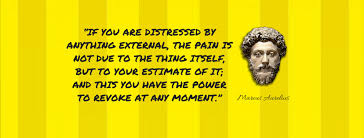

EQ: What is Stoicism? Click here for a quick overview.
EQ: What is Stoicism? Click here for a quick overview.

- Who represents stoicism in the novel? How?
- Contrast the ways the Fox and Orual view divine nature.
- Discuss Orual as a narrator? Impressions? Is she trustworthy?
- Themes so far?
HW: Read Ch.4 & 5, annotate for progress of the themes you see, especially that of Stoic thought, beauty vs. ugly, and the nature of the divine. Continue to assess the reliability of Orual's narration.
April 9 ~ Welcome Back! 6 weeks to go!
Mere Christianity Essays Due.
Here is a quick TED video. (It is a simplified version of the story, but it gets the main gist.)
Here is a LONG version, read to us. in Part 1 and Part 2 and Part 3 with a lovely country accent really.
- What variations have you heard?
- What themes did you pick up?
Have you gotten a copy of Till We Have Faces yet?
- By the way, it is easy to let your mind head to a search for an allegory due to Lewis' other works. By Lewis' own warning, this novel is not an allegory. Instead, focus on the themes that develop. What is Lewis using the story to say about us, life, the nature of the divine, spirituality, materialism, family, beauty, the management of your own heart, etc...
HW: Read Chapter 1 of Till We Have Faces (here is a junky pdf without page numbers).
- Journal 18
- Record three themes and a brief description of the development of each.
- Keep track of similarities and differences from the original myth
- How is the narrator in TWHF different from the original myth? What do you gather about Orual? How would you describe her tone? her reliability? What is your impression of her? Why do you think Lewis made this switch?
HW Nightly Reading Schedule:
Mon 4/9 Book 1, Chapters 1-3
Tue 4/10 Book 1, Chapters 4-5
Wed 4/11 Book 1, Chapters 6-7
Block 4/12 Book 1, Chapters 8-9
Mon 4/16 Book 1, Chapters 10-11
Tue 4/17 Book 1, Chapters 12-13
Wed 4/18 Book 1, Chapters 14-15
Block 4/19 Book 1, Chapters 16-18
Mon 4/23 Book 1, Chapters 19-21
Tue 4/24 Book 2, Chapters 1
Wed 425 Book 2, Chapters 2
Block 4/26 Book 2, Chapters 3-4
Subscribe to:
Comments (Atom)